

A salicylic acid serum is a BHA-based treatment that penetrates deep into pores to dissolve oil, dead skin cells, and debris. It helps reduce acne, control excess oil, and improve skin texture over time. Most people see initial results within 1–2 weeks, with significant improvement after 6–8 weeks of consistent use.
Dealing with breakouts that just won’t quit? You cleanse, you moisturize, you follow every step and yet the acne stays. That frustration is real, and you’re not alone in it.
What Is Salicylic Acid Serum?
A salicylic acid serum is a leave-on skincare treatment formulated with salicylic acid as its active ingredient. Unlike a face wash that rinses off in seconds, the serum stays on the skin long enough to work deep within the pore lining.
Salicylic acid belongs to the beta-hydroxy acid family more commonly called BHA. BHA is oil-soluble, which sets it apart from water-soluble acids. That oil-solubility is what allows it to cut through sebum and reach the source of congestion.
Most over-the-counter serums contain between 0.5% and 2% salicylic acid. That range is effective for daily skincare use without requiring a prescription.
Why Is Salicylic Acid Popular in Skincare?
Salicylic acid has earned its place in skincare routines for one key reason: it works on the root cause of acne, not just the surface.
Many acne treatments target bacteria or reduce inflammation after a breakout forms. Salicylic acid steps in earlier inside the pore preventing that buildup from happening in the first place.
It also has anti-inflammatory properties, which help calm redness and reduce the visible irritation that comes with active blemishes. That dual action preventive and corrective is why dermatologists consistently recommend it for acne-prone and oily skin.
What Does Salicylic Acid 2% Mean?
When you see salicylic acid 2% listed on a product, it refers to the concentration of the active ingredient in the formula.
2% is the maximum concentration allowed in over-the-counter acid products in most countries. It’s strong enough to deliver real results clearing blackheads, reducing breakouts, and improving skin texture without needing a clinical setting.
If you’re new to salicylic acid, starting with a lower concentration like a 1% salicylic acid serum gives your skin time to adjust before stepping up to a 2% formula.
How Salicylic Acid Serum Works for Acne and Clogged Pores
Understanding the mechanism helps you use the product more effectively. Here’s what happens when salicylic acid meets your skin.
Penetrates Deep Into Pores
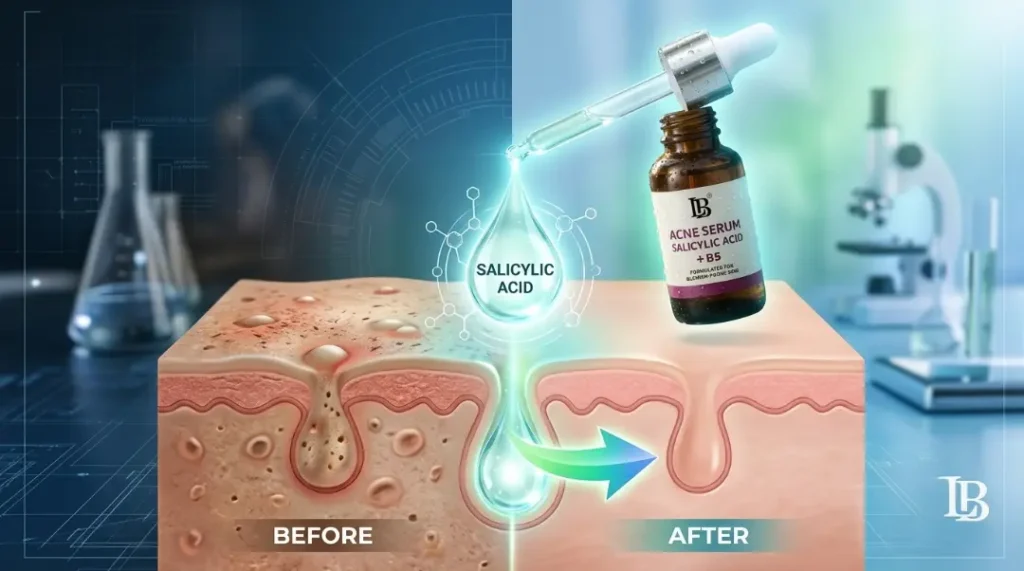
Salicylic acid is oil-soluble meaning it doesn’t sit on the surface the way water-based ingredients do. Instead, it penetrates deep into pores, traveling through the layer of sebum to reach the buildup underneath. This is what makes it particularly effective for oily skin types where other treatments struggle to get through.
Helps Remove Dead Skin Cells
Salicylic acid is keratolytic, which means it breaks down the bonds holding dead skin cells together. This accelerates the natural shedding of dead skin, allowing fresher skin cells to surface. Over time, this process also helps even skin tone and reduce post-acne marks.
Supports Clearer Skin Over Time
When oil and dead skin cells accumulate inside a pore, a blackhead, whitehead, or inflamed pimple forms. Salicylic acid’s ability to dissolve that combination of oil and dead skin cells inside the pore is what makes it so effective at delivering clearer skin with consistent use.
Key Benefits of Using Salicylic Acid Serum
Helps Unclog Pores
Salicylic acid unclogs pores by dissolving the sebum and dead cell buildup that causes congestion. Regular use keeps pores clear, which reduces their visible size over time.
Reduces Breakout Risk
By keeping pores clean, salicylic acid lowers the chance of new breakouts forming. This preventive quality is especially important for those who experience recurring acne rather than the occasional isolated pimple.
Improves Skin Texture
Consistent exfoliation with salicylic acid improves skin texture by removing the uneven layer of dead skin that creates roughness and dullness. This effect is one reason many people notice smoother skin within the first few weeks.
Helps Control Excess Oil
Salicylic acid regulates sebum production, which helps keep oily skin from overproducing oil throughout the day. Less excess oil means fewer clogged pores and fewer breakouts.
Supports a Clear Skin Routine
A well-chosen acne serum doesn’t just treat existing blemishes. It becomes a daily preventive step that keeps the skin balanced between breakouts.
Who Should Use Salicylic Acid Serum?
Best for Acne-Prone and Oily Skin
Salicylic acid is most effective for acne-prone and oily skin. If your skin tends to get shiny by midday, or if you regularly deal with congestion around the nose, chin, and forehead, a BHA serum is likely a strong fit.
Useful for Blackheads and Blemishes
Anyone struggling with blackheads around the nose or chin area will find salicylic acid especially helpful. Its oil-soluble structure allows it to reach into the pore where blackheads form something many other exfoliants can’t do as effectively. It also helps fade existing blemishes by supporting faster skin cell turnover.
Can Dry or Sensitive Skin Use It?
Yes, but with adjustments. Those with dry or sensitive skin should start with a lower concentration, use it less frequently, and always follow with a hydrating moisturizer. An acid gel formula may be better tolerated than a liquid serum for very sensitive skin types.
How to Use Salicylic Acid Serum Correctly
Getting results depends less on which product you buy and more on how you use it. Follow these four steps.
Step 1: Cleanse the Skin
Start with a gentle, pH-balanced cleanser. Clean skin allows the serum to absorb properly without having to work through a layer of makeup, sunscreen, or daily grime.
Step 2: Apply a Small Amount
Applying the serum to dry skin after cleansing gives salicylic acid the best contact with the skin surface. Use 2–3 drops for the full face, or focus on specific areas of concern.
Step 3: Follow With Moisturizer
Salicylic acid can cause dryness with continued use. A good moisturizer seals in hydration and helps prevent irritation. Keeping skin hydrated is non-negotiable.
Step 4: Use Sunscreen During the Day
Exfoliating acids increase sun sensitivity. Always apply a broad-spectrum sunscreen during the day after using any salicylic acid treatment.
How Often Should Salicylic Acid Serum Be Used?
For Beginners
Start 2–3 times per week. Let your skin adjust before increasing frequency. If your skin feels tight or shows signs of irritation after a week, scale back further.
For Oily Skin
Those with oily and acne-prone skin may tolerate daily use after building up tolerance over several weeks. Monitor for excessive drying of the skin, which signals you need to cut back.
For Sensitive Skin
Alternate-night use is often the most effective approach for sensitive skin. Pair it with calming, fragrance-free ingredients to minimize the risk of redness or peeling.
Ingredients to Pair With Salicylic Acid Serum
Hyaluronic Acid
Pairing a hyaluronic acid serum with salicylic acid is one of the most practical combinations in skincare. Hyaluronic acid draws water into the skin, helping counteract the dryness that salicylic acid can cause. Apply the hyaluronic acid after the salicylic acid serum, before your moisturizer.
Vitamin C
Vitamin C is best used in the morning, while salicylic acid is best applied at night. This keeps both ingredients at peak effectiveness and reduces the chance of irritation. Together, they help reduce acne marks and support a more even complexion.
Glycolic Acid
Salicylic acid and glycolic acid can complement each other, but not on the same day. Glycolic acid exfoliates the surface, while salicylic acid works deeper. Alternating them rather than layering them together avoids over-exfoliation.
Ingredients and Products to Avoid Mixing Too Often
Avoid Too Many Exfoliants
Using multiple exfoliating acid products together strips the skin barrier faster than it can recover. If you’re using salicylic acid regularly, reduce or pause other exfoliants on the same days.
Be Careful With Strong Acne Treatments
Combining salicylic acid with high-strength benzoyl peroxide or retinol can lead to significant irritation. Introduce one active ingredient at a time, and space out applications across your routine.
Do Not Overuse the Serum
Use the serum according to your skin’s tolerance not according to the idea that more is better. Overuse is one of the most common reasons people experience redness, peeling, and setbacks with their skincare goals.
Choosing the Best Salicylic Acid Serum
Check the Concentration of Salicylic Acid
For most people, a 2% formula offers the strongest over-the-counter option. If you have skin conditions that involve sensitivity or dryness, a lower percentage is the safer starting point.
Look for Supportive Ingredients
The best formulas don’t just contain salicylic acid they pair it with calming or hydrating ingredients. Look for niacinamide, panthenol, or aloe vera alongside the active. These reduce the likelihood of dryness and support the skin barrier.
Choose According to Skin Types
Different skin types need different formulations. Gel-based or lightweight serum textures suit oily skin. Cream-based options that contain salicylic acid work better for drier types.
Consider Local Availability
For buyers looking for a serum in Pakistan, several international brands now ship directly, and local pharmacies carry reliable options. When searching for a salicylic acid serum in Pakistan, checking both online platforms and dermatologist-recommended brands gives you the widest selection. Prices vary significantly, so comparing product concentration and supportive ingredients, not just cost helps you make a better choice.
Common Mistakes to Avoid
Using It Too Often
Starting too aggressively leads to a damaged skin barrier, which ironically causes more breakouts. Slow down if your skin protests.
Skipping Moisturizer
Salicylic acid works by exfoliating which can leave skin feeling tight or stripped. A moisturizer is always step three, not optional.
Forgetting Sunscreen
Skipping sunscreen during the day when you use salicylic acid routinely is one of the fastest ways to undo your progress. UV exposure on freshly exfoliated skin accelerates pigmentation and skin concerns.
Mixing Too Many Actives
Salicylic acid is powerful on its own. Adding too many active ingredients at once makes it impossible to know what’s helping and what’s causing irritation.
Is Salicylic Acid Serum Good for Acne?
Best for Mild to Moderate Acne
Salicylic acid is most effective for mild to moderate acne especially blackheads, whiteheads, and surface-level breakouts. For deeper cystic acne, it can still help reduce acne flares, but a dermatologist may recommend combining it with other treatments.
Helps Fight Acne Gently
Compared to harsher acne treatments, salicylic acid exfoliates gently enough for regular use. It reduces inflammation, breaks down clogged pores, and supports healthier skin over time without the peeling or bleaching effects associated with stronger options. It’s also been noted to help with acne and fungal acne, as its exfoliating action can reduce the skin buildup that feeds both conditions.
Supports Long-Term Skin Balance
The goal of using a salicylic acid serum isn’t just clearing a breakout it’s creating balanced skin that’s less reactive over time. Salicylic acid’s ongoing regulation of oil and dead skin cell accumulation is what makes it a long-term staple rather than a short-term fix.
Reduce Breakouts Effectively with Loyal Body Cosmetics
Clear skin starts with a consistent and effective skincare routine that targets acne, clogged pores, excess oil, and uneven texture at the source. Using salicylic acid-based care helps deeply cleanse pores, remove dead skin cells, and prevent future breakouts while promoting a smoother and more balanced complexion. With regular use, the skin becomes visibly clearer, healthier, and more refined over time. Pairing treatment with proper cleansing, hydration, and sun protection enhances long-term results and supports overall skin health. For trusted and effective skincare solutions that deliver real results, explore premium products from Loyal Body Cosmetics for a naturally radiant glow every day.
Frequently Asked Questions (FAQs)
Q. Can salicylic acid serum be used every day?
Daily use is possible for some people, but not the right starting point for everyone. Begin with 2–3 applications per week. Increase frequency only if your skin shows no signs of irritation, dryness, or sensitivity after 3–4 weeks.
Q. How long does it take to see results from a salicylic acid serum?
Most people notice improved skin texture within 1–2 weeks. Significant reduction in acne and clearer pores typically requires 6–8 weeks of consistent use. Initial purging where the existing blockage surface is normal and usually settles within 4–6 weeks.
Q. Does salicylic acid serum work for blackheads?
Yes. Because salicylic acid is oil-soluble, it penetrates into oil-filled pores and dissolves the buildup that causes blackheads. It’s one of the most effective over-the-counter ingredients for this specific concern.
Q. Can salicylic acid be used with retinol?
Yes, but not on the same night initially. Use salicylic acid on one evening, retinol on the next, and gradually work toward using both if your skin tolerates it. Always monitor for redness and dryness.
Q. What’s the difference between salicylic acid serum and a salicylic acid cleanser?
A serum stays on the skin after application, giving the active ingredient more time to penetrate the pore. A cleanser rinses off within seconds, which limits the depth of contact. Serums are generally more effective for treating acne and improving skin tone because of this extended contact time.
Q. Is salicylic acid safe during pregnancy?
Most dermatologists recommend avoiding high-concentration salicylic acid during pregnancy. Low-dose, rinse-off formulations are generally considered lower risk, but always consult a healthcare provider before use.